Best Patient Monitors: Top 10 Multi-Parameter Monitors (ICU, OR, Floors, Clinics)
This guide ranks the best patient monitors across bedside multi-parameter monitors, transport-capable platforms, and vital-signs monitors.
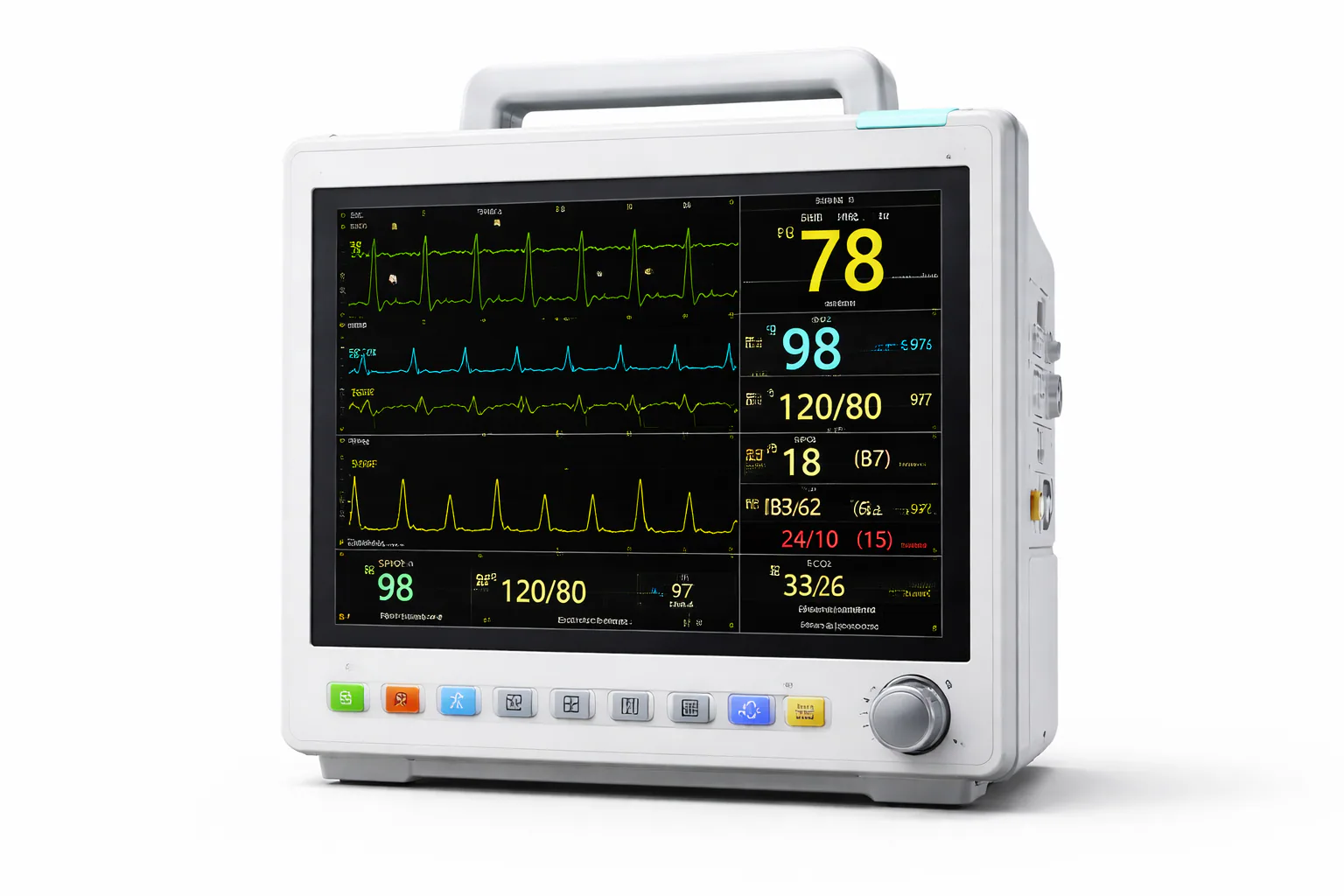
Patient monitors sit at the center of modern care workflows, from high-acuity ICU bedspaces to routine vital-signs collection on general floors and in clinics. The “best” patient monitor is not one device for every facility. It is the system that matches your clinical acuity, parameter needs, integration requirements, and service model without creating alarm fatigue, documentation burden, or expensive upgrade dead-ends.
This guide ranks the best patient monitors across bedside multi-parameter monitors, transport-capable platforms, and vital-signs monitors. Each entry includes what it does, standout features, a specs snapshot, practical buying notes, and a datasheet reference.
Best Patient Monitors
Pricing below reflects publicly visible examples such as used, refurbished, or reseller listings. New-hardware pricing is often quote-based and varies by configuration, warranty, modules, and service coverage.
Rank | Patient Monitor | Best For | Display | Monitoring Style | Example Price Points |
|---|---|---|---|---|---|
1 | Philips IntelliVue MX750 / MX850 | High-Acuity ICU/CCU Bedside Monitoring | 19-inch (MX750) / 22-inch (MX850) | Modular bedside monitor with plug-and-play expansion | Used listing example: $8,200 (MX750) |
2 | GE CARESCAPE Monitor B650 | Perioperative + ICU Workflows, Module Expansion | 15-inch, 1024×768 | Modular bedside monitor | Refurb example: $4,495 |
3 | Mindray BeneVision N22 / N19 | High-Acuity Monitoring With Large Rotatable Screen | 22-inch / 19-inch, 1680×1050 | High-acuity modular monitor | From $19,755 (listing example) |
4 | Spacelabs Xprezzon 91393 | High-Acuity Modular Monitoring With Enterprise Suite | 17-inch or 19-inch display options | Modular high-acuity monitor | Often quote-based; varies heavily by modules and enterprise software |
5 | Nihon Kohden Life Scope G5 | All-In-One Monitoring With Broad Parameters Including Neuro | 12.1-inch, 1280×800 | Bedside monitor with transport mode support | Commonly quote-based; configuration dependent |
6 | Dräger Infinity M540 | Bedside-To-Transport Continuity | 6.2-inch, 640×240 | Transport-capable “vital signs engine” platform | Used listing example: $139.99 (bundle dependent) |
7 | Masimo Root With NIBPT | Vital Signs Hub + Connectivity + Modular Expansion | Touchscreen hub (configuration dependent) | Platform integrating multiple modules and devices | Example listing: $3,334 |
8 | Welch Allyn Connex Spot Monitor | Spot-Check + Interval Vitals With EMR Connectivity | Portable spot monitor | Spot-check/interval vitals | Example: $3,090 |
9 | EDAN iM80 | Value Ward Monitor With Larger Screen | 15-inch display | Multi-parameter bedside/ward | Example listing: $4,400 |
10 | Bionet BM5 | Budget Multi-Parameter Monitor With Common Options | 10.4-inch, 800×600 | Multi-parameter monitor | Example listing: $1,977.98 |
What A Patient Monitor Should Do
A strong patient monitoring setup usually has four layers:
Measurement Layer: ECG, SpO₂, NIBP, respiration, temperature, and optional parameters like IBP, EtCO₂, anesthetic gas, BIS, and more depending on acuity.
Display And Alarm Layer: Clear waveforms, configurable screens, intelligible alarms, and good ergonomics.
Data Layer: Trend storage, event review, full disclosure, and structured export.
Integration Layer: Central monitoring stations, EMR charting (often via HL7 or vendor middleware), nurse call, remote viewing, and device-to-device interoperability.
The “best” monitor is the one that handles your required parameters reliably while fitting your workflow and integration reality.
How To Choose A Patient Monitor
Match The Monitor To Acuity And Care Area
ICU/OR/ED high acuity: Prioritize modular expansion, high waveform density, advanced alarm features, and strong integration.
General floors: Prioritize workflow speed, documentation quality, and manageable alarm policies.
Clinics/urgent care: Prioritize rapid spot-check vitals with clean EMR transfer and durable accessories.
Decide Which Parameters You Actually Need
Common baseline parameters:
ECG, HR, respiration
SpO₂
NIBP
Temperature
Common high-acuity add-ons:
IBP (often multiple channels)
EtCO₂ and respiratory metrics
Anesthetic gas
BIS or EEG-derived indices
Cardiac output support or integration
Early warning scoring tools
Evaluate Connectivity And EMR Strategy Early
Ask up front:
Does the monitor support Ethernet and Wi-Fi?
Does it connect to a central station, and what is the licensing model?
What is required for EMR charting: middleware, gateway, or direct integration?
Plan For Service, Parts, And Accessories
The monitor cost is only part of the spend. Budget for:
Modules and parameter expansion
Cables, leadwires, cuffs, probes, disposables
Batteries
Preventive maintenance and depot repair
Biomedical documentation and software version control
Top 10 Best Patient Monitors
1) Philips IntelliVue MX750 And MX850 Bedside Patient Monitor
What It Is
A high-acuity bedside monitoring platform designed for modular expansion and broad care-area configurations, including critical care, cardiac, neonatal, and anesthesia workflows. The platform supports plug-and-play expansion via Philips measurement modules and gas analyzers.
Key Features That Matter
Modular expansion: Designed to connect with Philips Multi-Measurement Module families and plug-in measurement modules for scalable parameter growth.
Bedside information access: Built-in options for accessing hospital intranet tools and bedside information, including Citrix and web application support, with an optional integrated PC concept in the technical documentation.
Alarm workflow tooling: Includes features described as automatic alarm limits and an alarm advisor concept to address recurring alarm-limit issues.
Display differentiation: MX750 is described with a 19-inch Full HD display, and MX850 with a 22-inch Full HD display.
Waveform density: MX750 supports up to 12 waves simultaneously and MX850 supports up to 16 waves simultaneously, per the technical data sheet.
Specs Snapshot
Spec | MX750 / MX850 Highlights |
|---|---|
Display | 19-inch Full HD (MX750), 22-inch Full HD (MX850) |
Modularity | Multi-Measurement Modules, plug-in modules, gas analyzers support described |
Waveforms | Up to 12 (MX750), up to 16 (MX850) |
Intended Use | Multi-parameter monitoring in hospital environments for adult, pediatric, neonatal patients (per documentation) |
Pricing Guidance
Example used listing for an IntelliVue MX750 shows an asking price of $8,200.
Secondary market aggregations may show different averages depending on region and configuration.
Datasheet And Technical Docs
Philips IntelliVue MX750/MX850 Technical Data Sheet
Who Should Buy It
Choose the IntelliVue MX series if you want a high-acuity bedside monitor platform with deep modularity and a mature ecosystem, and you are prepared to standardize accessories, modules, and service practices across units.
2) GE CARESCAPE Monitor B650 Multi-Parameter Patient Monitor
What It Is
A modular bedside monitor positioned for clinical environments that need flexible parameter coverage and integration pathways across perioperative and critical care workflows.
Key Features That Matter
Display and waveform capacity: The brochure lists a 15-inch TFT LCD display with 1024×768 (XGA) resolution and 8 individual waveforms, with additional waveforms available using overlays and insets.
Connectivity and ports (practical procurement details): The brochure lists a Unity Network ID, DisplayPort, multiple USB ports, and remote-on control input for anesthesia machine integration (implementation details matter when you are standardizing carts and OR setups).
Specs Snapshot
Spec | B650 Highlights |
|---|---|
Display | 15-inch TFT LCD |
Resolution | 1024×768 (XGA) |
Waveforms | 8 individual waveforms (more with overlays/insets) |
I/O | DisplayPort, USB 2.0 ports listed, plus integration-related inputs |
Pricing Guidance
Example refurbished listing: $4,495.
Market listings also show a wide range depending on included modules and condition.
Datasheet And Technical Docs
CARESCAPE Monitor B650 brochure/spec documentation
Who Should Buy It
Pick the B650 when you want a known modular bedside monitor ecosystem and you have clear requirements for display, waveform density, and integration points.
3) Mindray BeneVision N22 And N19 High Acuity Patient Monitor
What It Is
A high-acuity patient monitor series designed around a large, medical-grade touchscreen with a rotatable portrait/landscape workflow, plus extensive parameter support through modules.
Key Features That Matter
Large rotatable display: The datasheet specifies a medical-grade color TFT LCD capacitive touchscreen, rotatable between landscape and portrait.
Screen sizes and resolution: 22-inch (N22) and 19-inch (N19) with 1680×1050 resolution.
High waveform capacity: Up to 16 waveforms in portrait mode and up to 13 waveforms in landscape mode.
Broad parameter scalability: The datasheet outlines detailed performance specifications for ECG, SpO₂, NIBP, IBP, temperature, respiration, and more depending on modules.
Physical footprint awareness: Weight and dimensional data are specified, which matters for cart stability and wall-mount planning.
Specs Snapshot
Spec | N22 / N19 Highlights |
|---|---|
Display | 22-inch (N22) / 19-inch (N19), multi-touch, rotatable |
Resolution | 1680×1050 |
Waveforms | Up to 16 (portrait), up to 13 (landscape) |
Weight | N22: 11.5 kg, N19: 10.3 kg (example configuration described) |
Pricing Guidance
Example listing shows from $19,755 for Mindray BeneVision N19/N22 monitors (configuration dependent).
Another pricing database summary reports an average cost figure based on limited samples, best used only as a directional signal.
Datasheet And Technical Docs
BeneVision N22/N19 datasheet
BeneVision N series brochure describing the platform orientation
Who Should Buy It
If your teams value a large display, rotatable workflows, and dense waveform viewing for high-acuity care, the N22/N19 series is a strong candidate, especially when paired with a clear module standardization plan.
4) Spacelabs Xprezzon 91393 High Acuity Modular Monitor
What It Is
A high-acuity modular monitor designed for neonatal, pediatric, adult, and perioperative environments, with enterprise connectivity through Spacelabs central station and clinical suite options.
Key Features That Matter
Display flexibility: The datasheet describes compatibility with 17-inch or 19-inch touchscreen display options.
Trend storage: Stores up to 96 hours of trends and includes features described as remote viewing and Alarm Watch.
Modular growth path: Standard with two module slots, expandable with an optional two-slot module housing. Specialty modules listed include BISx, multigas, capnography, and SvO₂/ScvO₂.
Enterprise integration path: With Xhibit Central Station and Intesys Clinical Suite, it is positioned for EMR connectivity, ECG management systems, paging systems, and remote access solutions.
Connectivity inventory: Datasheet lists Ethernet LAN, multiple USB ports, DVI connectors for displays, and alarm relay output options.
Specs Snapshot
Spec | Xprezzon Highlights |
|---|---|
Displays | 17-inch or 19-inch display options |
Trend Storage | Up to 96 hours trends |
Module Slots | 2 slots standard, expandable to more with optional housing |
Connectivity | Ethernet, USB, DVI, alarm relay output options listed |
Pricing Guidance
Xprezzon deployments are frequently sold as configured systems with modules and enterprise connectivity components, so public pricing is inconsistent. Expect pricing to be driven primarily by module selection, central station licensing, and service agreements rather than the base unit alone. The datasheet emphasizes modular expansion and enterprise suite integration, which typically correlates with quote-based procurement.
Datasheet And Technical Docs
Spacelabs 91393 Xprezzon Data Sheet
Who Should Buy It
Choose Xprezzon if your facility wants modular growth with an enterprise monitoring ecosystem and you plan to standardize across Spacelabs bedside, portable, and central monitoring tools.
5) Nihon Kohden Life Scope G5 Bedside Monitor
What It Is
A bedside monitoring system positioned as an all-in-one monitor with a transport mode option and a workflow design that supports admission-to-discharge monitoring continuity.
Key Features That Matter
Display and UI: The spec sheet describes a 12.1-inch color TFT LCD display with 1280×800 resolution and touch screen functionality.
Broad waveform support: Lists up to 15 traces and supports multiple waveform types including ECG (up to 12), respiration, IBP (up to 8), CO₂, BIS-EEG, ventilator waveforms, and others depending on configuration.
Data retention: Trend display time up to 72 hours, plus full disclosure storage and event/history recalls, per the spec sheet.
Expanded integration claims: The spec sheet describes integration with third-party devices such as ventilators, anesthesia systems, and continuous cardiac output devices.
Unique differentiator in the spec sheet: Mentions combining vital signs monitoring with 8-channel neurology monitoring.
Specs Snapshot
Spec | Life Scope G5 Highlights |
|---|---|
Display | 12.1-inch TFT LCD, 1280×800 |
Traces | Up to 15 traces (up to 30 with two displays) |
Trend Storage | Up to 72 hours (per spec sheet sections) |
Connectivity | Ethernet and other interfaces listed |
Pricing Guidance
Life Scope configurations vary widely (parameters, modules, and integration). Public prices are less consistently posted than some other monitors, so procurement teams typically handle this via institutional quotes. Use the datasheet-defined parameter and integration scope to build a configuration BOM before requesting pricing.
Datasheet And Technical Docs
Life Scope G5 Spec Sheet
Who Should Buy It
This is a strong candidate for facilities seeking a broad all-in-one bedside monitor that spans low- to mid-acuity with significant parameter breadth and integration intent.
6) Dräger Infinity M540 Patient Monitor Platform
What It Is
A compact monitor designed to move with the patient, commonly positioned as a bedside-to-transport platform and also as a component in broader monitoring solutions.
Key Features That Matter
Scalable parameter model: Dräger describes a scalable monitor that follows a patient over the care pathway, with parameters activated by connecting measurement modules.
Display specs: Product information specifies a color LCD touchscreen with a 6.2-inch diagonal display and 640×240 resolution.
Transport and continuity concept: Documentation describes its role as a compact bedside and transport option, with networking support when used as standalone, depending on the setup.
Specs Snapshot
Spec | Infinity M540 Highlights |
|---|---|
Display | 6.2-inch color LCD touchscreen |
Resolution | 640×240 |
Modularity | Measurement modules connected as needed (platform concept) |
Pricing Guidance
Public resale pricing varies dramatically depending on whether the unit includes a docking station, measurement modules, and accessories. One example used listing shows $139.99, which is not representative of fully configured clinical setups but illustrates how wide the resale market can be.
If you are buying for clinical deployment, treat pricing as a configured-system question, not a single SKU question.
Datasheet And Technical Docs
Dräger Infinity M540 product information and specifications
Who Should Buy It
This is best for hospitals that prioritize continuity from bedside to transport and want a compact platform strategy rather than separate bedside and transport devices.
7) Masimo Root Patient Monitoring And Connectivity Platform
What It Is
A monitoring and connectivity hub that consolidates multiple noninvasive monitoring functions into one platform and expands through modules, integration ports, and connected devices.
Key Features That Matter
Integrated NIBP and temperature workflows: The brochure highlights NIBP modes and integrated temperature monitoring options, plus an optional non-contact Bluetooth thermometer.
Masimo SET and rainbow technologies: The platform is positioned to present Masimo SET measurements and rainbow measurements, and to integrate with other Masimo monitors and wearables in the ecosystem.
Expansion through modules: Masimo Open Connect (MOC-9) modules are described as expanding monitoring capabilities with additional Masimo and third-party measurement technologies.
Connectivity and remote monitoring: The brochure describes EMR integrated monitoring, automatic charting, and remote alarm notification concepts through associated systems.
Early Warning Scores and workflow: Describes automated EWS calculation and EMR push workflows for spot-check plus continuous monitoring.
Specs Snapshot
Spec | Masimo Root Highlights |
|---|---|
Platform Type | Monitoring and connectivity hub with touchscreen navigation |
Expandability | MOC-9 modules for additional measurements and device connectivity |
Workflow Features | EWS calculation and EMR push concepts described |
Pricing Guidance
Example listing shows Root priced at $3,334 in an online catalog context.
Other listings in secondary marketplaces can be far lower, depending on what is included and the device condition.
For planning, treat Root pricing as “platform plus modules plus integration” rather than a single number.
Datasheet And Technical Docs
Masimo Root brochure (Root with NIBPT)
Who Should Buy It
Root is compelling when your primary need is a connectivity hub that consolidates noninvasive monitoring and integrates data flows across devices, especially in environments that benefit from structured vitals capture and alerting.
8) Welch Allyn Connex Spot Monitor Vital Signs Monitor
What It Is
A spot-check and interval vital signs monitor designed for clinicians collecting routine vitals efficiently, with a focus on EMR connectivity and reducing manual transcription.
Key Features That Matter
EMR connectivity positioning: The brochure explicitly frames sending patient data directly to the EMR to support accuracy and efficiency.
Compact, mobile specs: The spec sheet provides physical dimensions and weight, useful for cart planning and room-to-room workflow design.
Primary vitals scope: Product pages and documentation describe core measurements such as NIBP, SpO₂, pulse rate, temperature, and respiration rate from photoplethysmogram for certain patient groups depending on configuration.
Specs Snapshot
Spec | Connex Spot Monitor Highlights |
|---|---|
Physical Size | Width 9.2 in, depth 2.3 in (spec sheet) |
Weight | 2.9 lbs (spec sheet) |
Workflow | Spot-check and interval monitoring positioning, EMR connectivity messaging |
Pricing Guidance
Example pricing: $3,090 from one reseller listing.
Another listing shows $3,319.
Datasheet And Technical Docs
Connex Spot Monitor spec sheet
Connex Spot Monitor brochure
Connex Spot Monitor IFU (for full capabilities and constraints)
Who Should Buy It
This is a top choice for general floors, clinics, and ambulatory settings that want reliable vitals capture with cleaner documentation workflows, without the complexity and cost of a full ICU waveform monitor.
9) EDAN iM80 Multi-Parameter Patient Monitor
What It Is
A multi-parameter patient monitor positioned as a ward and bedside monitor with a larger screen and optional parameter expansion.
Key Features That Matter
15-inch display: The iM80 brochure describes a 15-inch high-resolution color TFT display.
Core monitoring scope: Standard parameters listed include ECG/HR/RESP, SpO₂, NIBP, PR, and dual temperature.
Connectivity and central monitoring: The brochure mentions bi-directional communication with a central station system, plus nurse call functionality.
Clinical workflow features: The brochure mentions OxyCRG availability and pacemaker detection, which can matter in neonatal or specific ward workflows depending on your protocol.
Specs Snapshot
Spec | EDAN iM80 Highlights |
|---|---|
Display | 15-inch color TFT |
Standard Parameters | ECG/HR/RESP, SpO₂, NIBP, PR, 2-TEMP |
Central Station | Bi-directional communication mentioned |
Pricing Guidance
Example listing shows $4,400.
As always, confirm included modules, warranty, and accessories.
Datasheet And Technical Docs
iM80 brochure (EDAN USA)
iM50/iM60/iM70/iM80 spec sheet (family specs)
Who Should Buy It
If you want a value-focused multi-parameter monitor with a larger display for wards and step-down care, and you can live within a smaller ecosystem than the largest OEMs, iM80 is a practical contender.
10) Bionet BM5 Multi-Parameter Patient Monitor
What It Is
A budget-friendly multi-parameter patient monitor designed for common vitals with optional expansion for additional parameters like EtCO₂ and IBP.
Key Features That Matter
Baseline parameters and expandability: The datasheet lists ECG, SpO₂, NIBP, respiration, temperature, plus optional IBP and EtCO₂ configurations.
Display: 10.4-inch color TFT LCD, 800×600 resolution, and up to 6 waveforms shown.
Trend storage: 128 hours of trend data stored, per datasheet.
Networking: Datasheet notes connection to a central monitoring system using LAN or WLAN.
Specs Snapshot
Spec | Bionet BM5 Highlights |
|---|---|
Display | 10.4-inch TFT LCD, 800×600 |
Parameters | ECG, SpO₂, NIBP, respiration, temp, optional IBP and EtCO₂ |
Trend Storage | 128 hours |
Connectivity | LAN / WLAN to central monitoring |
Pricing Guidance
Example used listing: $1,977.98.
Pricing will vary based on modules (EtCO₂, IBP), accessories, and warranty.
Datasheet And Technical Docs
BM5 patient monitor datasheet
Who Should Buy It
BM5 is attractive when you need a functional multi-parameter monitor at a lower entry cost and can accept a simpler ecosystem than enterprise ICU platforms.
Total Cost Of Ownership: What Actually Drives Cost
Even when two monitors have similar baseline vitals, total cost diverges based on these levers:
Module And Parameter Expansion
High-acuity systems typically become expensive when you add:
Additional IBP channels
EtCO₂ modules and consumables (water traps, sampling lines)
Anesthetic gas monitoring and agent identification
BIS or EEG-related monitoring
Example: Xprezzon explicitly lists specialty modules such as BISx, multigas, capnography, and SvO₂/ScvO₂ as expansion paths.
Integration Licensing And IT Work
If you need EMR auto-charting, central station views, and remote alarms, plan for:
Interface engines or gateways
Network segmentation and cybersecurity reviews
Software options and licenses
Root’s brochure, for example, emphasizes EMR integrated monitoring and data transfer workflows through connected systems.
Accessories Standardization
Budget for:
ECG leadwires and trunk cables
SpO₂ probes (adult, pediatric, neonatal), replacement cycles
NIBP cuffs (multiple sizes), hoses, connectors
Batteries and chargers
Mounting hardware, carts, and cable management
Frequently Asked Questions
What Is The Difference Between A Bedside Multi-Parameter Monitor And A Spot Monitor?
A bedside multi-parameter monitor is designed for continuous monitoring with waveforms and alarms, often expandable with modules. A spot monitor focuses on capturing vitals periodically and sending them to the record, often optimized for fast workflow and mobility. The Connex Spot Monitor is positioned around this workflow and EMR transfer concept.
How Much Does A Patient Monitor Cost?
It depends heavily on type and configuration:
Spot vital-signs monitors commonly show pricing around a few thousand dollars in public reseller listings.
High-acuity bedside monitors can range from used units in the low-to-mid thousands to configured systems far higher, depending on modules and service.
Which Patient Monitor Is Best For ICU Use?
ICU use typically favors modular, waveform-dense bedside monitors with deep integration. In this list, IntelliVue MX750/MX850, CARESCAPE B650, BeneVision N22/N19, and Xprezzon are structured for high-acuity modular expansion.
Final Buying Recommendations
If You Need A High-End ICU Platform
Philips IntelliVue MX750/MX850 for modular bedside monitoring and higher waveform density.
Mindray BeneVision N22/N19 if a large rotatable workflow is a priority.
If You Need A Strong Modular Bedside Monitor With Established Integration Paths
GE CARESCAPE B650 for a known modular bedside approach with practical integration I/O details in the documentation.
If You Want Enterprise Modular Monitoring With Central Station And Suite Options
Spacelabs Xprezzon 91393, especially if you are standardizing within the Spacelabs ecosystem.
If Your Priority Is Vitals Workflow And Connectivity Across Devices
Masimo Root, especially where consolidation and EMR workflow concepts are central to your plan.
If You Want Strong Value In General Care Areas
Welch Allyn Connex Spot Monitor for routine vitals capture and workflow efficiency.
EDAN iM80 and Bionet BM5 for value-focused continuous monitoring options with published parameter lists and display specs.