Top 10 EEG Caps to Buy in 2026 (Pricing, Specs, and Datasheets)
This guide ranks 10 top options and, for each one, includes what it does, who it is for, the key features that matter in practice, pricing, and the manufacturer datasheet or technical spec reference.
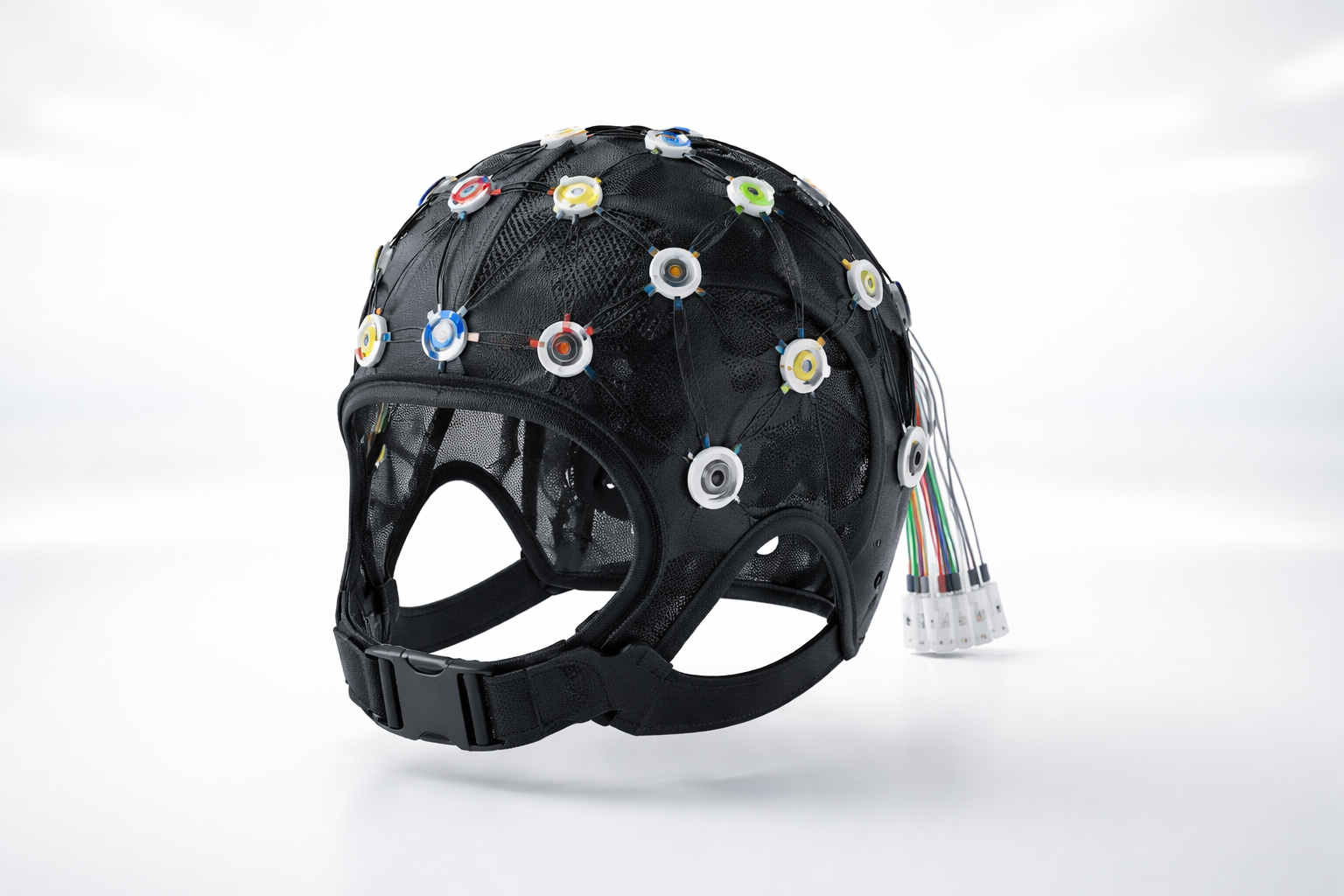
If you are shopping for an EEG cap or wearable EEG headset, the hardest part is not finding “a device that records brainwaves.” It is finding a system that matches your protocol, your budget, your setup workflow, and your data access needs.
Some products are built for publishable EEG with clean triggers and stable electrodes. Others are designed for fast setup and day to day use, but hide raw data behind subscriptions. And a few are in a separate category altogether: EEG plus stimulation, where the value is the closed loop training experience rather than the EEG stream itself.
This guide ranks 10 top options and, for each one, includes what it does, who it is for, the key features that matter in practice, pricing, and the manufacturer datasheet or technical spec reference.
SEO quick picks: best EEG caps by use case
Best research grade dry EEG cap for fast setup: CGX Quick-20r v2
Best mobile wet EEG system for “brain in motion” studies: ANT Neuro eego sports + waveguard caps
Best water based EEG cap for field research: Bitbrain Versatile EEG
Best BCI teaching and engineering headset (open programming focus): g.tec Unicorn Hybrid Black (GitHub)
Best 14 channel prosumer EEG headset for broad head coverage: Emotiv EPOC X (Emotiv)
Best XR and multimodal neuro platform (EEG + more): OpenBCI Galea (OpenBCI Shop)
Best consumer sleep and meditation headband with higher quality specs disclosure: Muse S Athena
Best productivity focused wearable EEG with on device compute: Neurosity Crown
Best “invisible EEG” form factor (headphones) with research kit option: Neurable MW75 Neuro LT
Best EEG plus photobiomodulation training system: Sens.ai (Sens.ai)
EEG cap buying guide: the specs that actually matter
1) Electrode type decides your setup time and your artifact profile
Wet gel (Ag/AgCl): Best established signal quality, but slow prep and cleanup. Good for high motion if the cap is stable (sports, rehab).
Dry comb or polymer: Fast setup and clean workflow, but contact quality depends heavily on hair type, head shape, and mechanical pressure. Systems with active shielding and impedance indicators generally do better.
Saline or semi dry pads: Less messy than gel, but pads can dry out over long sessions and need rehydration. Emotiv is the most common example. (Emotiv)
Water based sponge sensors: A practical middle ground for field studies, cleaner than gel and often more stable than many fully dry designs.
2) Channels and montage decide what you can study
For BCI (SSVEP, P300, motor imagery) you can get real work done with 8 to 16 channels if electrode locations are well chosen and triggers are reliable.
For ERP research and broad cognitive studies, more channels and good sensor coverage usually make life easier, especially when you need frontal and temporal sites.
3) Sampling rate and noise floor matter more than “AI features”
If you care about high fidelity EEG, pay attention to:
Sampling rate (higher helps preserve faster dynamics and cleaner filtering, but your protocol determines what you truly need).
ADC resolution (24 bit is typical on serious research platforms).
Input noise floor (sub microvolt RMS is a strong signal chain indicator).
4) Software licensing can dominate total cost
Some vendors sell hardware at a tempting price, then require subscriptions for raw data export or integrations. Emotiv’s plan tiers are the clearest example. (Emotiv)
At a glance comparison table (specs and pricing)
Pricing is what the vendor or a reseller publicly lists; institutional systems are often “request a quote,” and taxes or shipping can change totals.
Product | EEG channels | Electrode style | Sampling (as stated) | Resolution (as stated) | Typical price model |
|---|---|---|---|---|---|
CGX Quick-20r v2 | “20-channel” headset, plus additional channels noted on manufacturer pages | Dry electrodes with shielding, LED impedance indicators | 500 SPS (and higher rate modes noted) | 24 bit | Request quote; reseller packages list mid to high five figures |
g.tec Unicorn Hybrid Black | 8 channels | Hybrid dry or gel capable electrodes, oversampling noted | 250 Hz per channel | 24 bit | Purchase price in the low thousands depending on market and kit |
Emotiv EPOC X | 14 channels | Saline based sensors | Multiple modes listed in datasheet | Listed in datasheet | Hardware purchase plus subscription for many workflows (Emotiv) |
OpenBCI Galea | EEG plus multimodal | Integrated electrodes in XR facial interface | Listed in Galea specs | Listed in Galea specs | High priced system bundle |
ANT Neuro eego sports + waveguard | 8, 24, 32, 64 channel amplifier options (varies by configuration) | Wet caps (waveguard) plus mobile amp | Up to 2 kHz class in many configs | Up to 24 bit | Institutional quote |
Bitbrain Versatile EEG | 8, 16, 32, 64 (product family) | Water based sponge sensors | 256 SPS stated in user guide | 24 bit | Request info / quote |
Muse S Athena | “7 EEG sensors” stated | Wearable headband with EEG plus fNIRS | 256 Hz | 14 bits | Consumer purchase price under $500 |
Neurosity Crown | 8 channels | Flexible dry sensors | 256 Hz | Noted in specs as ultra low noise chain | Consumer purchase price shown on vendor site |
Neurable MW75 Neuro LT | 12 channels stated | Dry fabric sensors in headphones | 500 Hz stated for research kit | Noted on research kit listing | Consumer LT price reported; research kit sold separately |
Three sensors stated by reseller and support materials | EEG plus heart sensing plus tPBM LEDs | EEG band claims vary by source | tPBM LED specs disclosed | Device purchase plus paid membership |
Top 10 EEG caps and wearable EEG headsets (full breakdown, pricing, and datasheets)
1) CGX Quick-20r v2 EEG cap: research grade dry EEG with fast setup and impedance LEDs
What it is
CGX Quick-20r v2 is a wireless dry EEG headset designed for research workflows that need fast prep without gel. It is marketed as a “Quick Series” system and is explicitly positioned for research level data capture with dry electrodes, plus on headset LED impedance indicators for contact quality.
Why it makes the list
If you need faster participant throughput, dry electrodes, and a workflow that can still support rigorous studies, the Quick-20r v2 is one of the clearest “prep speed without giving up research intent” options.
Datasheet snapshot (from manufacturer resources)
Channels: marketed as a 20-channel headset, and also described as “21 channels EEG + 2 channels ExG” in manufacturer materials
Resolution: 24 bit
Sampling: 500 SPS is listed in the user manual and vendor spec listings
Bandwidth: listed in the user manual as approximately 0.2 Hz to 131 Hz at 500 SPS
Wireless: Bluetooth 5.0 listed in the user manual
Battery: up to 8 hours listed in the user manual
Weight: about 600 g listed in the user manual
Integration: Brain Products notes the CGX Quick systems integrate with BrainVision Recorder
Datasheet and technical spec references
CGX Quick-20r v2 product page with LED impedance and channel claims
CGX Quick-20r v2 user manual PDF (technical specs)
Brain Products “CGX Quick systems” overview
What it does best
ERP and cognitive tasks where speed matters: the LED impedance indicators reduce the trial and error of dry contact.
High throughput studies: fewer consumables than gel systems, and less cleanup.
Watch outs and practical considerations
Dry systems can still be sensitive to hair density and head shape. Even with good electronics, you should plan for a short fit and adjust loop in your protocol.
If your study demands classic wet cap equivalence for every participant, consider wet systems.
Pricing
Many sellers position this system as quote based. The Crunchbox store lists it as “Request a Quote.”
A reseller listing shows collection packages priced roughly in the mid to high five figures depending on bundle level.
2) g.tec Unicorn Hybrid Black EEG headset: best for BCI education, prototyping, and developer workflows
What it is
The Unicorn Hybrid Black is an 8-channel wearable EEG headset built for BCI applications, with hybrid electrodes designed for dry use or with gel, and a high signal to noise architecture including oversampling claims.
Why it makes the list
It is one of the most approachable “serious” BCI development headsets: fewer channels than research lab caps, but a clear focus on raw acquisition, stable hardware, and developer friendliness.
Datasheet snapshot
Channels: 8
Resolution: 24 bit
Sampling: 250 Hz per channel
Oversampling: “4096 times oversampling” is stated on the configurator page
Electrodes: “Unicorn Hybrid EEG Electrodes” for dry or wet recordings, and a validation paper describes the use of g.SAHARA hybrid active electrodes
Datasheet and technical spec references
g.tec Unicorn product configurator page (features, oversampling claim, included software)
g.tec Unicorn Hybrid Black product page (core acquisition claims)
Independent validation PDF describing sampling and electrode technology
Unicorn user manual and quickstart references (GitHub)
What it does best
Teaching BCI fundamentals: SSVEP, P300, and motor imagery type prototypes can be built with a compact montage when you prioritize clean acquisition and accessible software tools.
Developer prototyping: it is positioned as customizable and programmable with an included software environment.
Watch outs and practical considerations
With 8 channels, it is not meant for high density source localization or nuanced frontal asymmetry studies.
For some ERP style work, conductive solution can be needed for best results according to validation literature.
Pricing
Pricing varies by region and kit. An independent reviewer reports the kit price in the low thousands of euros.
A peer reviewed article also references the system cost as around the low thousands in USD terms.
3) Emotiv EPOC X EEG cap headset: 14-channel coverage for prosumer research and neuromarketing (subscription considerations)
What it is
Emotiv EPOC X is a 14-channel EEG headset that uses saline based sensors rather than gel, and targets prosumer research, education, and applied use cases where a full lab cap is too slow. Its value proposition is broad head coverage with a quick setup approach. (Emotiv)
Why it makes the list
It is widely used because it hits a practical balance: more channels than most consumer headbands, less setup than gel caps, and a mature software ecosystem.
Datasheet snapshot (high level)
Channels: 14 EEG channels (plus reference sensors in the platform design) (Emotiv)
Sensor approach: saline based sensors designed for faster setup than gel (Emotiv)
Sampling and other acquisition details: listed on Emotiv’s technical specification documentation (Emotiv)
Datasheet and technical spec references
Emotiv EPOC X technical specifications documentation (Emotiv)
EmotivPRO plan and pricing page (licensing tiers) (Emotiv)
What it does best
Whole head coverage at entry level research scale: compared with 4 to 8 sensor wearables, 14 sensors helps with more diverse paradigms.
Applied studies and UX research: where rapid setup and “good enough” spatial coverage matter more than perfect wet electrode impedance.
The critical downside: software licensing
If your goal includes raw EEG export, research grade workflows, or certain integrations, you must factor the EmotivPRO subscription tiers into cost. Emotiv lists a Standard plan at $149 per month or $1,068 per year, and a Performance tier at $20,000 annually. (Emotiv)
Pricing and total cost reality check
A simple way to budget: hardware plus at least the Standard EmotivPRO plan if you require raw export and serious workflows. The subscription can exceed hardware cost over typical multi-year use. (Emotiv)
4) OpenBCI Galea: best EEG cap alternative for XR research and multimodal biosensing
What it is
OpenBCI Galea is not a traditional EEG cap. It is a neuro and physiology sensor platform designed to integrate into high end XR headsets, combining EEG with additional biometrics and synchronization needs in immersive environments.
Why it makes the list
If you try to wear a conventional cap under a VR headset, comfort and motion artifacts can ruin your session. Galea’s value is that it is designed for XR first.
Datasheet snapshot (concept level)
Multimodal sensor platform with EEG and other channels described in Galea specs and brochure materials
Designed for XR integration, including bundle sales tied to specific headset ecosystems by resellers (OpenBCI Shop)
Datasheet and technical spec references
Galea hardware specs documentation
OpenBCI Galea brochure PDF
What it does best
Neuro UX and XR training research: EEG synchronized with other signals is often the only way to interpret workload, stress, and behavior in immersive environments.
Multimodal modeling: EEG alone is fragile under motion; adding additional channels helps.
Pricing
A reseller listing positions the Galea system as a premium bundle in the tens of thousands of dollars, often tied to a specific XR headset ecosystem. (OpenBCI Shop)
5) CGX Quick-20r v2 vs ANT Neuro eego sports: which one is for you?
Before the next entry, this is a key decision point:
If you want dry electrodes and fast setup, you usually lean CGX Quick style systems.
If you want high motion tolerance and classic wet cap signal stability, mobile wet systems like eego sports often dominate.
Now, the eego sports itself.
5) ANT Neuro eego sports EEG cap system: gold standard mobile wet EEG for sports and movement science
What it is
ANT Neuro eego sports is an ultra mobile EEG and EMG recording solution built around the eego amplifier and waveguard cap ecosystem. The key idea is that you can record in high motion scenarios with strong signal integrity, trigger support, and high sampling options.
Datasheet snapshot
From ANT Neuro’s product page and brochure:
Configurations: amplifier options include 24-channel and 32/64-channel variants (depending on setup)
Resolution: up to 24 bit
Sampling: brochure lists “user selectable sampling rate up to 2048 Hz” and the product page lists “Max Sampling Rate: 2 kHz” class with higher limits depending on amplifier model
Noise: less than 1.0 µV RMS is listed in the brochure for multiple configurations
Input impedance: greater than 1 GΩ in brochure and product page
Trigger input: brochure and product page list TTL trigger inputs for synchronization
Battery mode: integrated battery operation is listed for some configurations, with up to 5 hours in the product page for the 32/64 system
Datasheet and technical spec references
ANT Neuro eego sports product page (amp dimensions, sampling ranges, triggers, battery mode)
eego sports brochure PDF (core features and amplifier technical specification table)
What it does best
Sports science and movement research: where motion is unavoidable and dry consumer devices collapse under muscle artifacts.
High rate acquisition needs: if your lab needs higher sampling headroom for certain analyses, eego systems are built for that category.
Pricing
This category is typically institutional and quote based. The best approach is to budget as a system purchase (amplifier, caps, accessories, and support), not a consumer headset.
6) Bitbrain Versatile EEG cap: water based electrodes for real world research (8 to 64 channels)
What it is
Bitbrain Versatile EEG is a portable wireless water based EEG cap family offered in multiple channel counts. The electrodes are water based, and the caps are designed for field research, real world tasks, and setups where gel is too messy but fully dry is too variable.
Datasheet snapshot
Channel options: marketed as 8, 16, 32, and 64 channel caps
Electrode placement: sensors can be placed in predefined layouts within 10/20 and 10/10 systems, with flexible positioning supported by the platform
Sampling and resolution (from Versatile 8ch user guide): sampling 256 samples per second, 24-bit resolution
Storage: SD card support is described in the user guide
Wireless: Bluetooth is described in the user guide
Datasheet and technical spec references
Bitbrain Versatile EEG product family page
Bitbrain Versatile 8ch user guide PDF (technical specs)
What it does best
Field studies: retail, driving simulators, workplace research, and other environments where cable noise and gel prep are a barrier.
Research teams that need a cleaner workflow: water based sensors reduce cleanup friction compared to gel systems.
Pricing
Bitbrain positions Versatile EEG as a contact us product. For budgeting, assume quote based pricing that scales with channel count and included modules.
7) Muse S Athena EEG headband: consumer friendly EEG plus fNIRS, with disclosed sampling specs
What it is
Muse S Athena is a wearable headband that combines EEG sensing with fNIRS in a consumer oriented form factor. Unlike many wellness wearables that hide technical specs, Muse publicly states key sampling and sensor details on its product page.
Datasheet snapshot (from product page)
EEG sensors: product page states 7 EEG sensors
Sample rate: 256 Hz
Resolution: 14 bits
Additional sensing: fNIRS is listed as part of the device’s sensing package
Price: listed at $474.99 on the product page
Datasheet and technical spec references
Muse S Athena product page with technical specs
What it does best
At home meditation and sleep workflows: where comfort and repeatability matter.
Longitudinal tracking: a headband is easier to use frequently than any multi electrode cap.
Watch outs
Even with more sensors than older headbands, this is not a replacement for a 20 to 64 channel research cap if your protocol depends on broad montage coverage.
8) Neurosity Crown EEG headset: productivity focused EEG with on device processing and published tech specs
What it is
Neurosity Crown is an EEG wearable designed around productivity and focus, with on device compute (N3 chipset) and a spec sheet that explicitly lists sampling rate, noise floor, connectivity, and “in the box” contents.
Datasheet snapshot
EEG channels: 8-channel montage with sensor locations listed by Neurosity (CP3, C3, F5, PO3, PO4, F6, C4, CP4)
Sampling rate: 256 Hz
Noise floor: 0.25 µVrms listed in tech specs
Compute: N3 chipset with quad-core processor and onboard storage listed in tech specs
Connectivity: Bluetooth and WiFi listed
Battery: 3-hour rechargeable lithium-ion listed
Price: “Buy $1,499” is shown on Neurosity’s “how it works” page
Datasheet and technical spec references
Crown tech specs page
Crown FAQ with montage details and electrode durability claim
Crown “how it works” page with price
What it does best
Developer driven focus apps: on device compute and cloud stack make it easier to build feedback experiences.
Repeatability: fixed sensor placement reduces some of the “where did I put the electrodes?” variability of DIY rigs.
Watch outs
The montage is not a full clinical cap layout, so you should treat it as a specialized wearable, not a universal EEG cap replacement.
9) Neurable MW75 Neuro LT EEG headphones: 12-channel dry fabric EEG in a wearable form factor
What it is
Neurable MW75 Neuro LT puts EEG sensors into the earcups of headphones using soft fabric sensors. The core promise is “brain tracking with no cap,” aimed at focus, fatigue, and cognitive strain monitoring during normal daily headphone use.
Datasheet snapshot
EEG channels: 12 EEG channels stated by Neurable and partners
Sensor type: soft or dry fabric EEG sensors
Bandwidth: Master and Dynamic describes a 0 Hz to 131 Hz bandwidth with True DC coupling for the MW75 Neuro sensors
Sampling rate: iMotions’ research kit listing states 500 Hz sampling rate for the 12-channel EEG system
Datasheet and technical spec references
Neurable MW75 Neuro LT product page (12 channels and app workflow)
iMotions MW75 Neuro Research Kit listing (12-channel, 500 Hz, dry fabric sensors)
Master and Dynamic announcement page (channel count and EEG bandwidth claims)
What it does best
“Invisible EEG” for office and everyday use: the biggest barrier to EEG adoption is wearing an EEG cap. Headphones reduce social friction.
Long sessions: headphones are naturally designed for extended wear compared with many rigid headsets.
Pricing
MW75 Neuro LT has been reported at $499 in consumer coverage. (SoundGuys)
The MW75 Neuro (non LT) is listed at $699 on Neurable’s site (often with promotional codes).
If you are writing procurement copy, describe pricing as “varies by model and bundle,” then cite both the vendor and third party references.
10) Sens.ai EEG headset: EEG plus transcranial photobiomodulation with disclosed LED specs and membership pricing
What it is
Sens.ai is a closed loop training system that combines EEG and heart signal sensing with transcranial photobiomodulation (tPBM) and app guided programs. In practical buying terms, it is less about giving you a raw EEG stream and more about delivering a guided neurotraining experience. (Sens.ai)
Datasheet snapshot (tPBM specs and training model)
tPBM hardware: Sens.ai lists 7 specialized LEDs at 810 nm, power 250 mW/cm², and frequency personalization features for Boost programs
Support article: also states 810 nm and an estimated power per LED (slightly different number, which is common across marketing vs support writeups)
Sensors: product page describes “precision EEG and heart rate sensors” supporting neurofeedback and HRV biofeedback
EEG sensors: a reseller description explicitly states three brainwave sensors and detection up to 120 Hz
Datasheet and technical spec references
Sens.ai headset store page (tPBM technical specs)
Sens.ai support article about tPBM specs
Sens.ai product page (EEG + heart sensing overview)
Pricing and membership
Sens.ai publicly lists the device at $1,250 and explains that full membership features continue after the included access period at $29 per month (renewed annually). (Sens.ai)
What it does best
Structured neurotraining and coaching workflows: for users who want an end to end experience rather than assembling an EEG hardware and software stack.
Closed loop personalization: the platform states the stimulation parameters are adjusted based on the user’s data.
Watch outs
If your project needs raw EEG for custom modeling or publication, validate data access terms before purchase. Many training first systems prioritize guided metrics over raw streams.
Pricing deep dive: recurring costs and “hidden” cost drivers
Here is a procurement focused table for budgeting.
Product | Upfront price | Recurring costs you must budget | Key note |
|---|---|---|---|
Emotiv EPOC X | Hardware purchase | EmotivPRO Standard $149/month or $1,068/year; Performance tier $20,000/year (Emotiv) | Subscription can dominate multi-year total cost |
$1,250 device (Sens.ai) | $29/month after included period, renewed annually (Sens.ai) | Membership is tied to premium “Missions” and features | |
CGX Quick-20r v2 | Quote based, reseller packages in five figures | Software stack depends on lab workflow | Research dry EEG budgets should include accessories and support |
ANT Neuro eego sports | Quote based | Consumables for wet caps and potential accessories | Best for motion, but wet workflow has recurring consumables |
Bitbrain Versatile EEG | Request info / quote | Water based sensors still need hydration and maintenance | Field studies friendly, but plan for replacements |
Muse S Athena | $474.99 | App subscriptions are optional depending on your usage | Consumer focused, strongest for repeat usage |
Neurosity Crown | $1,499 | Some support programs include electrode replacements | Check current membership terms and what is included |
g.tec Unicorn Hybrid Black | Low thousands in price references | Usually buy once toolkits | Strong for BCI teaching and prototyping |
Neurable MW75 Neuro LT | Reported $499 (SoundGuys) | App ecosystem depends on bundle | Research kit exists for raw data workflows |
OpenBCI Galea | High priced system bundle (OpenBCI Shop) | Varies by sensors and XR components | A platform purchase, not a simple cap |
FAQ: common SEO questions about EEG caps
Are dry EEG caps accurate?
They can be, but “dry” alone is not the key. The full system matters: electrode design, impedance monitoring, shielding, amplifier noise, and mechanical stability. Systems like CGX emphasize dry electrodes plus onboard impedance feedback and research integration.
How many EEG channels do I need?
8 channels can be enough for many BCI demos and focused paradigms if the montage is chosen well.
14 to 21 channels is a more flexible range for applied research and broader cognitive tasks. (Emotiv)
32 to 64 channels is typical when you need higher density research setups or complex analyses; these are usually quote based systems.
What is the best EEG cap for research grade ERP studies without gel?
If you want to avoid gel, dry research systems with impedance monitoring and stable mechanics are usually the shortlist, and CGX Quick systems explicitly target that niche while being integrated with BrainVision workflows.
Which EEG cap is best for sports and movement experiments?
Mobile wet EEG systems are still the default for high movement scenarios. ANT Neuro’s eego sports line is explicitly positioned for “ultra mobile EEG and EMG” style research and discloses high sampling and trigger options.
Can an EEG cap read thoughts?
EEG measures electrical activity patterns at the scalp. It can detect correlates of mental states and task responses, but it does not “read thoughts” in the way the phrase is used in popular media. For procurement, focus on what your protocol needs: signal quality, event timing, and repeatable setup, not marketing claims.
Bottom line: how to choose your top 10 winner
If you want a simple purchasing decision rule:
If you publish, prioritize acquisition quality and workflow: CGX (dry research), ANT Neuro (mobile wet), Bitbrain (water based field).
If you teach or prototype BCI, g.tec Unicorn is a strong choice because it is engineered around BCI capture and development oriented tooling rather than wellness metrics. (GitHub)
If you need convenience but still want more sensors, Emotiv EPOC X is common, but budget for subscription. (Emotiv)
If you need XR plus multimodal, treat Galea as a platform purchase, not just an EEG cap. (OpenBCI Shop)
If you want everyday wearable EEG, Muse, Neurosity, and Neurable are the comfort first picks, each with different tradeoffs in channel count and data accessibility.